Blissspace Team | 20 August , 2026
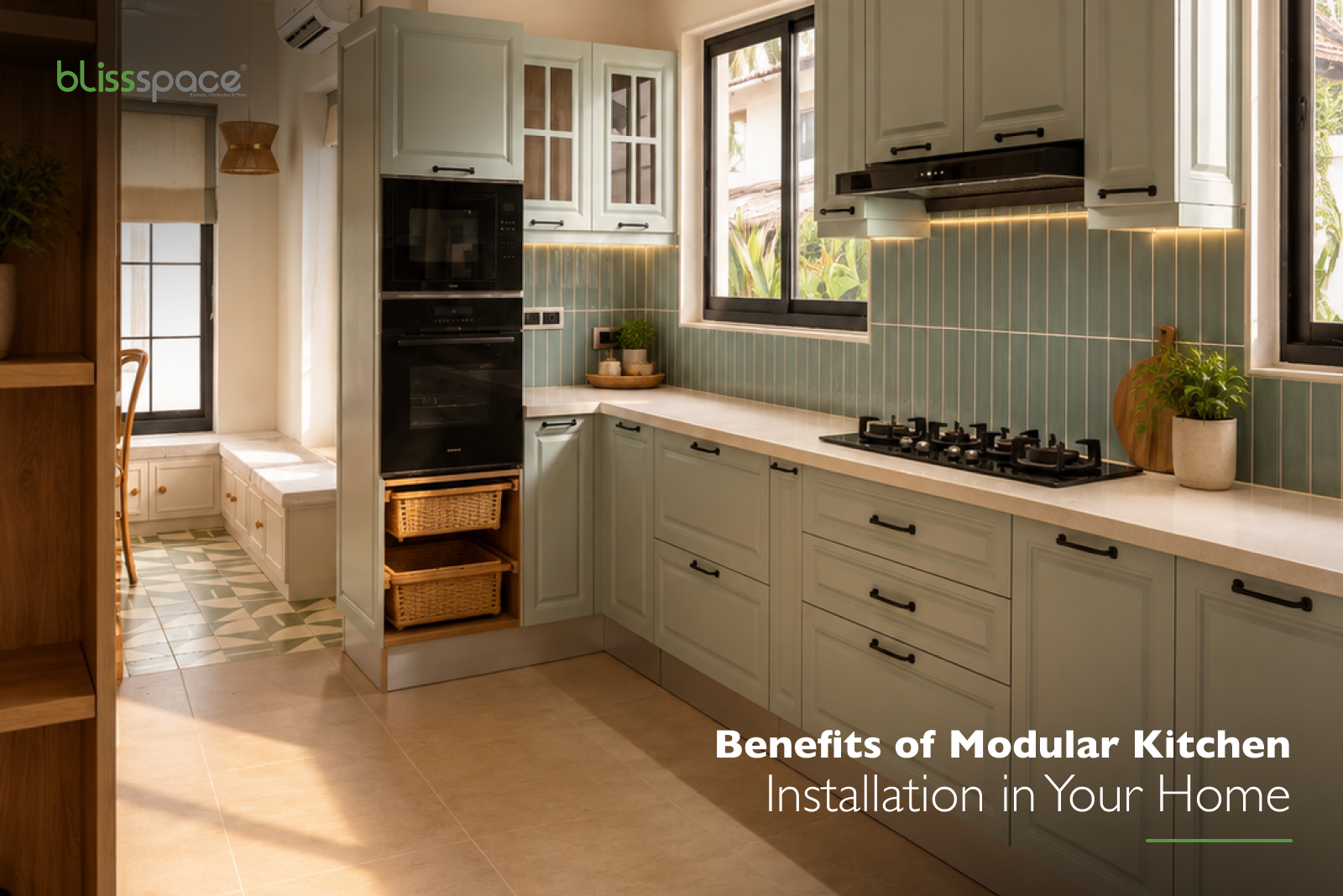
A traditional kitchen build in most Indian homes still means weeks of carpenters and sawdust, and cabinet doors that never quite close right afterward. The benefits of modular kitchen systems show up first in what disappears from that picture: the mess, the guesswork, the follow-up visits nobody budgeted for.
This is not a sales pitch for one brand over another. On the ground, it means less dust during the build and fewer surprises once the kitchen is actually in daily use.
Carpenter-built kitchens are usually built around whatever wood the workshop had on hand that week, adjusted on-site with a hand saw. Modular systems start the other way. Every unit is measured against the actual room, down to the last awkward corner, before a single panel gets cut.
That precision is where most modular kitchen benefits actually begin:
None of this shows up in a showroom photo. A year in, though, it is the reason one kitchen still has room to spare while another feels tight. Compact apartments feel the difference most, since a wasted inch costs more in a small room, and a well-planned layout there often stores more than a careless one twice the size.
Heat, oil, steam, and monsoon humidity are not kind to ordinary wood. Particle board swells within a season or two near the coast. Paint on hand-built cabinets chips at the hinges within a couple of years, usually before anyone notices the boards underneath have already started to give.
Modular kitchens are built around materials chosen for that punishment specifically. HDHMR boards and moisture-resistant, termite-resistant construction hold their shape through humid seasons that would warp regular plywood. A ten-year warranty on the core structure is not a marketing line. Boards rated for that long have to survive real monsoons, not a lab test.
Core Board: Engineered to resist moisture, termites, and warping over years of daily heat and steam
Shutter Finish: Laminate, acrylic, or PU options chosen for how they hold up near a working hob
Hardware: Soft-close hinges and drawer channels rated for thousands of open-close cycles
Run a hand along the inside of a modular cabinet and the advantages of modular kitchen design are obvious right away. Factory-cut edges sit flush. There are no gaps where crumbs and oil settle, and no raw wood edges left exposed the way hand-built joints often are.
What that precision actually prevents:
Hygiene follows directly from that precision. Smooth, sealed surfaces do not trap grease the way rough carpentry does. Cleaning a modular cabinet takes a wipe. A decade-old hand-built one needs real scrubbing at a seam that was never sealed properly, and even then the smell of trapped oil tends to linger.
Consistency is the other piece. Every drawer in a modular kitchen opens the same way, closes the same way, and sits at the same depth. Even a skilled carpenter, working across two weeks on-site, struggles to match that by hand.
A carpenter-built kitchen usually means weeks of a home partly unusable: tools scattered across what used to be a dining table, and a completion date that keeps slipping. Fabrication happens off-site in a factory with modular kitchens, while the homeowner is still finalising finishes at home.
Once the units arrive, on-site assembly typically wraps up within hours rather than weeks, since every piece already fits by design instead of being shaped on the spot. That speed matters most for families working around school schedules or a job that will not pause for a renovation. A factory timeline removes most of the pressure before it starts, since the biggest decisions were already made and finalised weeks earlier at the design stage.
Why choose a modular kitchen over a fully custom carpenter build? Because modular no longer means limited. Finish libraries now run into the thousands of colour, texture, and hardware combinations, which covers most of what a fully custom build used to offer at a much higher price.
Resale value works on the same logic. A buyer walking through a flat notices even cabinet lines and drawers that still close properly, and reads the whole kitchen as better maintained, no matter how old the rest of the flat is. Buyers notice a kitchen that still functions the way it did on day one.
Personalisation now happens at the design stage instead of through improvisation on-site. The homeowner sees the exact layout, colour, and storage plan before anything is manufactured. Changing a handle style or a drawer configuration at that stage costs no more than a revised drawing. The same change mid-carpentry usually means redoing work already paid for.
A modular kitchen's advantage does not end at installation. Sealed surfaces and factory-finished edges cut down on upkeep: no repainting, no resealing joints, no annual touch-up.
What warranty coverage typically protects:
A hand-built kitchen rarely comes with paperwork like this at all. Warranty coverage on the core structure and hardware puts a documented guarantee behind the boxes, hinges, and channels doing their job for years, not just a verbal assurance from the carpenter.
This matters more in humid regions than most people expect. A kitchen near the coast works harder against moisture every single monsoon than one further inland, and a warranty that accounts for that is worth more here than the same paperwork would be elsewhere.
None of this means every home needs the most expensive finish available. The real benefits of modular kitchen systems show up in daily use. Drawers still close properly after three years. Corners store things instead of collecting clutter. The layout was designed around how the household actually cooks, not around whatever wood the carpenter had that week.
Most homeowners notice how much these details matter only once they have three separate quotes sitting on the table to compare side by side. Blissspace plans each layout during a 3D design stage before anything is fabricated, walking the homeowner through material, storage, and finish choices together. The Panjim showroom has finished modular kitchens at different price points that visitors can open, touch, and compare before deciding what genuinely fits their home.