Blissspace Team | 30 June , 2026
The ceiling above the stove in a three-year-old kitchen tells everything. Run your hand across it. Yellow. Sticky. A film of oil that wiping does not remove. That residue coats the wall behind the fridge, the light fitting, every nearby shelf. Kitchen ventilation problems never announce themselves. They coat every surface quietly.
Most kitchens in India still run on one exhaust fan above the window. That worked when the kitchen sat behind a closed door. Open layouts changed things. Oil and smoke drift into the living room, land on the sofa, and coat the dining chairs. Ventilation that coped behind a door collapses once that wall comes down.
Temper mustard seeds in hot oil and grease droplets hit the air. You feel them on your skin before seeing them on the wall. Deep frying coats everything within arm's reach. A pressure cooker venting three times a day adds moisture on top. No other cooking style loads this much into the air this often.
The wall behind the stove in a kitchen without a chimney shows what accumulates. Touch it after six months. The paint feels different. Cabinet doors nearest the hob turn darker than the rest. That discolouration is oil bonded to the laminate, and regular cleaning does not shift it. The damage is permanent.
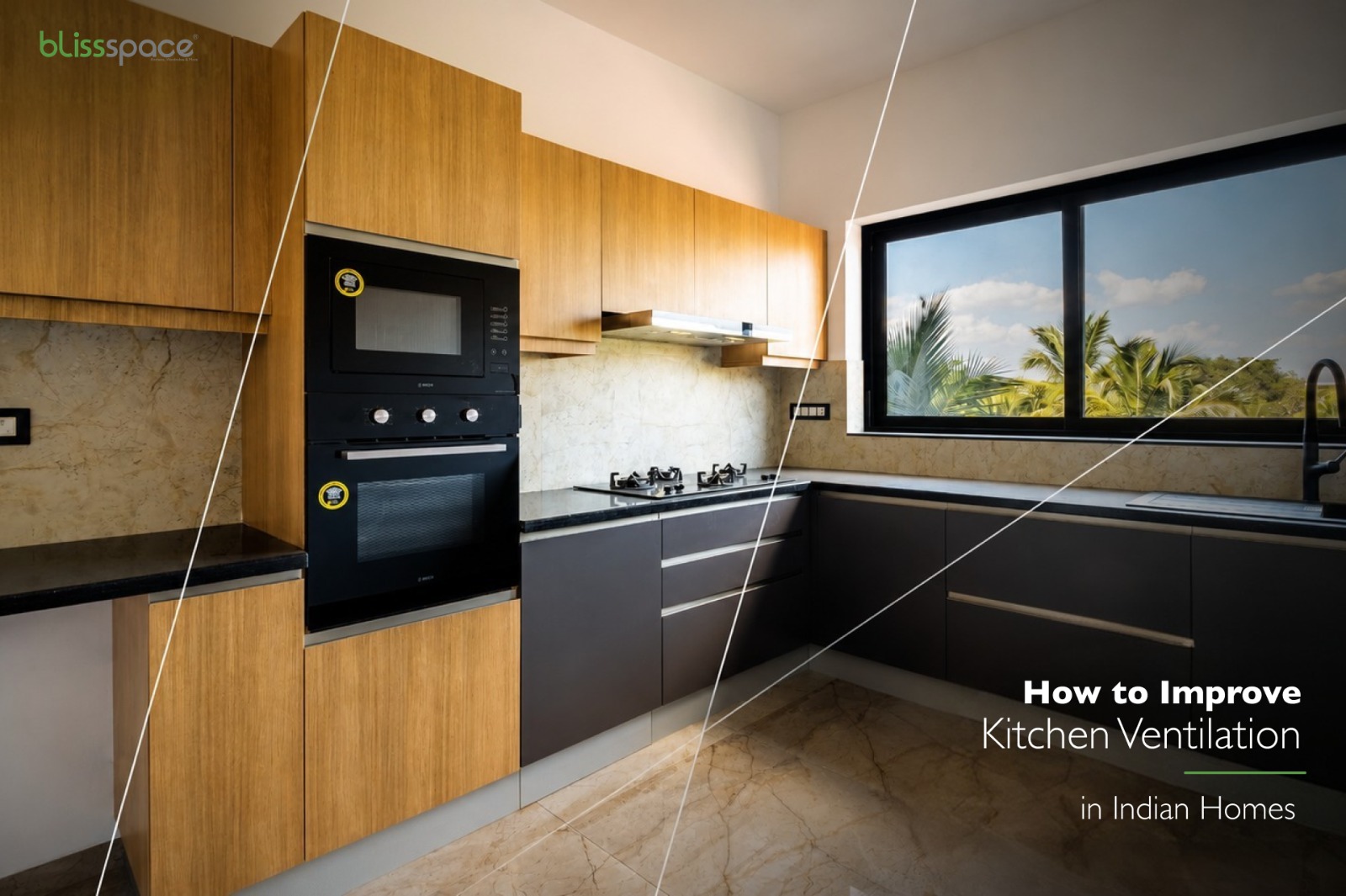
A working chimney catches smoke above the burner before it drifts sideways. The grease filter traps oil. The duct pushes everything out through the exterior wall. Hold your hand six inches above a boiling pan under a properly working chimney and you feel the air pulling upward. That pull is what actually matters.
Most chimneys in Indian kitchens recirculate instead of ducting outside. They filter air and blow it back into the room. Your face still feels the heat. Cabinets still collect grease. Smell drops but moisture and oil stay where they were. A duct to the exterior wall is the only setup that genuinely clears the kitchen.
Placement matters as much as power. The chimney should sit directly above the hob, not offset to one side for looks. Every inch between the burner and chimney inlet is suction lost. Mounting height stays between 24 and 30 inches above the cooking surface. Higher than that and the smoke drifts sideways before getting caught.
Turn the exhaust on during a heavy tadka and watch the smoke. It does not leave through the fan. It spreads sideways faster. Oil particles ride the air and land on walls across the room. The far wall ends up greasier than the one behind the hob. That is the fan genuinely working against you.
After cooking, the fan earns its place. It pulls residual heat and the smell that lingers after frying. With a window open opposite, cross-draft replaces stale air in minutes. During active cooking though, when oil is hot, the fan just moves dirty air faster. It does not trap grease. It relocates it across the kitchen.
For kitchens with no window, a ducted chimney through the exterior wall paired with a fresh air vent opposite creates a loop that replaces air continuously. Kitchen ventilation in Indian homes without natural airflow depends on duct positioning being decided during design, not after the cabinets and countertops are in place.
Grease on cabinet surfaces is the first visible sign. The finish turns sticky. Fingerprints show permanently. Laminate lifts at the edges near the hob where moisture crept underneath. In coastal Goa, where humidity already fights the cabinetry, poor ventilation speeds the decay enough that some kitchens need full refacing within three years of installation.
The damage underneath is worse. Moisture trapped inside cabinets swells the core material. MDF warps. Hinges loosen because screw holes have softened. Electrical points near the stove collect grease internally, which becomes a safety concern over time. None of it is dramatic. All of it is expensive once the damage becomes visible.
The chimney duct needs a hole through an exterior wall. Cutting that after the kitchen is installed means working around the countertop, backsplash, and framing. Something gets damaged almost every time. Plan kitchen ventilation during layout, when chimney position, duct route, and fresh air source can all be decided before anything is built.
Blissspace includes ventilation planning in the 3D kitchen design from the start. Chimney placement, duct routing to the nearest exterior wall, exhaust positioning, and window orientation are all part of the layout conversation. The Panjim showroom has working chimney setups homeowners can test for noise and suction before choosing anything from a catalogue.