Blissspace Team | 26 June , 2026
The kitchen was almost finalized. Cabinets chosen, countertop decided, layout approved. Then someone's mother asked which direction the stove would face and the entire plan went back to the drawing board. Kitchen vastu shows up at some point in nearly every Indian home project. Ignoring it rarely goes smoothly. Understanding it takes ten minutes.
Most vastu principles for kitchens are not arbitrary. Southeast for fire, water away from heat, ventilation on certain walls. Much of it lines up with design logic that modern architects would independently recommend. The challenge is applying it inside a floor plan that was probably not built with vastu in mind at all.
Vastu positions the kitchen in the southeast because that direction is linked to Agni, the fire element. In practical terms, southeast corners receive strong morning sunlight. That keeps the space warm, dry, and less prone to moisture. For a room generating heat and steam daily, that orientation makes genuine functional sense.
Northwest works as the fallback kitchen direction when southeast is unavailable, mostly because those walls catch cross-ventilation properly. The northeast is where vastu draws a hard line. That corner is tied to water and prayer, and in most Indian floor plans it genuinely tends to be the dampest, coolest part of the entire house.
The stove goes in the southeast corner, and vastu for kitchen layouts suggests the cook face east while preparing food. Whether or not you follow the reasoning, facing east means morning light falls directly on the cooking surface without casting shadows. That is a genuine benefit most kitchen designers would recommend regardless.
The sink and water purifier should sit in the northeast, away from the stove. Vastu frames this as separating fire and water elements. Keeping water away from the heat source reduces moisture near the flame and makes the workflow move in one direction instead of zigzagging. The design logic holds completely on its own.
The fridge does best in the southwest or west according to vastu. Placing it away from the stove stops the compressor from overworking in the heat zone. It should not block pathways or face the cooking area directly. Vastu and ergonomic kitchen planning arrive at the same conclusion here without needing to reference each other.
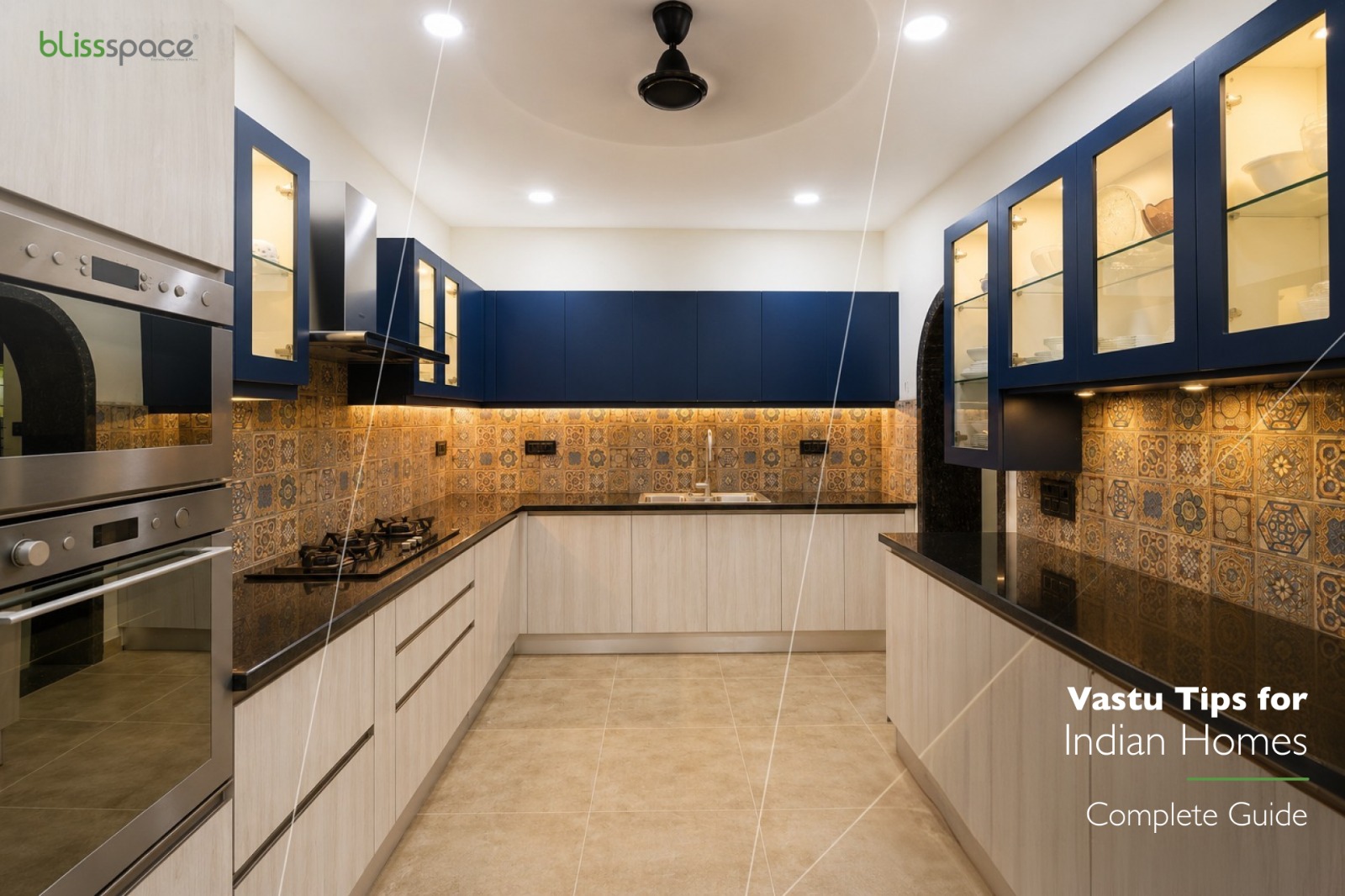
Vastu favours warm tones. Orange, yellow, earthy brown, soft red. It discourages black and dark shades on walls or cabinets. The reasoning is not just spiritual. A kitchen with lighter walls genuinely feels more open, and you can actually see what you are doing while handling knives and hot oil near an open flame.
Green works well in kitchens according to vastu, and homeowners in Goa gravitate toward it naturally because it pairs with the greenery visible through most kitchen windows here. Oak, walnut, and light wood-grain laminates fit the vastu preference for natural textures while being the most popular modular kitchen finishes across India right now.
Beams above the stove are something vastu flags, and anyone who has cooked under one understands why without needing the spiritual explanation. The ceiling feels lower. Grease and soot coat the surface within months. In older Goan homes with exposed wooden beams, that buildup becomes a cleaning problem that never fully goes away.
The kitchen door should not face the bathroom door directly. Vastu treats this as contamination between spaces. From a ventilation standpoint, bathroom air pulled into a cooking area through cross-draft is a real hygiene problem. Keeping the two separated by a passage or buffer wall is sound advice regardless of what you believe about vastu.
Vastu also warns against placing the kitchen directly below a bathroom on an upper floor. In Goan apartments and villas with stacked floor plans, this shows up more than people expect. Plumbing leaks from above damage kitchen cabinets and electrical fittings over time. The vastu guideline here protects against a genuinely common structural problem.
Most homeowners do not follow kitchen vastu to the letter, and honestly they do not need to. What works is treating the principles as design inputs, not mandates. Southeast placement brings light to the cooking surface. Separating fire from water creates a cleaner workflow. These hold up on functional merit without needing any spiritual framing.
Where it gets difficult is when the floor plan makes full compliance impossible. A north-facing kitchen in a second-floor flat cannot relocate to the southeast. The practical approach there is applying what you can: stove placement, colour choices, sink positioning. Let the rest follow the layout. Perfection is not the point. Thoughtful adaptation is.
Blissspace plans kitchen layouts during the 3D design stage, and vastu preferences are part of that conversation from day one. Stove position, sink placement, ventilation, and colour selection get adjusted based on what the homeowner wants to follow. The Panjim showroom walks clients through layouts where vastu and modern modular design sit together comfortably.